AI Coding Tools

Explore the best AI Coding Tools — independent reviews, comparisons, pricing and step-by-step how-to guides, curated by Aizhi.

  • Crucible (software)

    Crucible (software)

    Crucible is a collaborative code review application by Australian software company Atlassian. Like other Atlassian products, Crucible is a Web-based application primarily aimed at enterprise, and certain features that enable peer review of a codebase may be considered enterprise social software. Crucible is particularly tailored to remote workers, and facilitates asynchronous review and commenting on code. Crucible also integrates with popular source control tools, such as Git and Subversion. Crucible is not open source, but customers are allowed to view and modify the code for their own use.

    Read more →
  • DARPA Grand Challenge

    DARPA Grand Challenge

    The DARPA Grand Challenge is a prize competition for American autonomous vehicles, funded by the Defense Advanced Research Projects Agency, the most prominent research organization of the United States Department of Defense. Congress has authorized DARPA to award cash prizes to further DARPA's mission to sponsor revolutionary, high-payoff research that bridges the gap between fundamental discoveries and military use. The initial DARPA Grand Challenge in 2004 was created to spur the development of technologies needed to create the first fully autonomous ground vehicles capable of completing a substantial off-road course within a limited time. The third event, the DARPA Urban Challenge in 2007, extended the initial Challenge to autonomous operation in a mock urban environment. The 2012 DARPA Robotics Challenge, focused on autonomous emergency-maintenance robots, and new Challenges are still being conceived. The DARPA Subterranean Challenge was tasked with building robotic teams to autonomously map, navigate, and search subterranean environments. Such teams could be useful in exploring hazardous areas and in search and rescue. In addition to the challenges in autonomous technology, DARPA has also conducted prize competitions in other areas of technology. == History and background == Fully autonomous vehicles have been an international pursuit for many years, from endeavors in Japan (starting in 1977), Germany (Ernst Dickmanns and VaMP), Italy (the ARGO Project), the European Union (EUREKA Prometheus Project), the United States of America, and other countries. DARPA funded the development of the first fully autonomous robot beginning in 1966 with the Shakey the robot project at Stanford Research Institute, now SRI International. The first autonomous ground vehicle capable of driving on and off roads was developed by DARPA as part of the Strategic Computing Initiative beginning in 1984 leading to demonstrations of autonomous navigation by the Autonomous Land Vehicle and the Navlab. The Grand Challenge was the first long distance competition for driverless cars in the world; other research efforts in the field of driverless cars take a more traditional commercial or academic approach. The U.S. Congress authorized DARPA to offer prize money ($1 million) for the first Grand Challenge to facilitate robotic development, with the ultimate goal of making one-third of ground military forces autonomous by 2015. Following the 2004 event, Dr. Tony Tether, the director of DARPA, announced that the prize money had been increased to $2 million for the next event, which was claimed on October 9, 2005. The first, second and third places in the 2007 Urban Challenge received $2 million, $1 million, and $500,000, respectively. 14 new teams have qualified in year 2015. The competition was open to teams and organizations from around the world, as long as there was at least one U.S. citizen on the roster. Teams have participated from high schools, universities, businesses and other organizations. More than 100 teams registered in the first year, bringing a wide variety of technological skills to the race. In the second year, 195 teams from 36 U.S. states and 4 foreign countries entered the race. == 2004 Grand Challenge == The first competition of the DARPA Grand Challenge was held on March 13, 2004 in the Mojave Desert region of the United States, along a 150-mile (240 km) route that follows along the path of Interstate 15 from just before Barstow, California to just past the California–Nevada border in Primm. None of the robot vehicles finished the route. Carnegie Mellon University's Red Team and car Sandstorm (a converted Humvee) traveled the farthest distance, completing 11.78 km (7.32 mi) of the course before getting hung up on a rock after making a switchback turn. No winner was declared, and the cash prize was not given. Therefore, a second DARPA Grand Challenge event was scheduled for 2005. == 2005 Grand Challenge == The second competition of the DARPA Grand Challenge began at 6:40 am on October 8, 2005. All but one of the 23 finalists in the 2005 race surpassed the 11.78 km (7.32 mi) distance completed by the best vehicle in the 2004 race. Five vehicles successfully completed the 212 km (132 mi) course: Vehicles in the 2005 race passed through three narrow tunnels and negotiated more than 100 sharp left and right turns. The race concluded through Beer Bottle Pass, a winding mountain pass with a sheer drop-off on one side and a rock face on the other. Although the 2004 course required more elevation gain and some very sharp switchbacks (Daggett Ridge) were required near the beginning of the route, the course had far fewer curves and generally wider roads than the 2005 course. The natural rivalry between the teams from Stanford and Carnegie Mellon (Sebastian Thrun, head of the Stanford team was previously a faculty member at Carnegie Mellon and colleague of Red Whittaker, head of the CMU team) was played out during the race. Mechanical problems plagued H1ghlander before it was passed by Stanley. Gray Team's entry was a miracle in itself, as the team from the suburbs of New Orleans was caught in Hurricane Katrina a few short weeks before the race. The fifth finisher, Terramax, a 30,000 pound entry from Oshkosh Truck, finished on the second day. The huge truck spent the night idling on the course, but was particularly nimble in carefully picking its way down the narrow roads of Beer Bottle Pass. == 2007 Urban Challenge == The third competition of the DARPA Grand Challenge, known as the "Urban Challenge", took place on November 3, 2007 at the site of the now-closed George Air Force Base (currently used as Southern California Logistics Airport), in Victorville, California (Google map). The course involved a 96 km (60 mi) urban area course, to be completed in less than 6 hours. Rules included obeying all traffic regulations while negotiating with other traffic and obstacles and merging into traffic. Unlike previous challenges, the 2007 Urban Challenge organizers divided competitors into two "tracks", A and B. All Track A and Track B teams were part of the same competition circuit, but the teams chosen for the Track A program received US $1 million in funding. These 11 teams largely represented major universities and large corporate interests such as CMU teaming with GM as Tartan Racing, Stanford teaming with Volkswagen, Virginia Tech teaming with TORC Robotics as VictorTango, Oshkosh Truck, Honeywell, Raytheon, Caltech, Autonomous Solutions, Cornell University, and MIT. One of the few independent entries in Track A was the Golem Group. DARPA has not publicly explained the rationale behind the selection of Track A teams. Teams were given maps sparsely charting the waypoints that defined the competition courses. At least one team, Tartan Racing, enhanced the maps through the insertion of additional extrapolated waypoints for improved navigation. A debriefing paper published by Team Jefferson illustrates graphically the contrast between the course map it was given by DARPA and the course map used by Tartan Racing. Tartan Racing claimed the $2 million prize with their vehicle "Boss", a Chevy Tahoe. The second-place finisher earning the $1 million prize was the Stanford Racing Team with their entry "Junior", a 2006 Volkswagen Passat. Coming in third place was team VictorTango, winning the $500,000 prize with their 2005 Ford Escape hybrid, "Odin". MIT placed 4th, with Cornell University and University of Pennsylvania/Lehigh University also completing the course. The six teams that successfully finished the entire course: While the 2004 and 2005 events were more physically challenging for the vehicles, the robots operated in isolation and only encountered other vehicles on the course when attempting to pass. The Urban Challenge required designers to build vehicles able to obey all traffic laws while they detect and avoid other robots on the course. This is a particular challenge for vehicle software, as vehicles must make "intelligent" decisions in real time based on the actions of other vehicles. Other than previous autonomous vehicle efforts that focused on structured situations such as highway driving with little interaction between the vehicles, this competition operated in a more cluttered urban environment and required the cars to perform sophisticated interactions with each other, such as maintaining precedence at a 4-way stop intersection. == 2012 Robotics Challenge == The DARPA Robotics Challenge is an ongoing competition focusing on humanoid robotics. The primary goal of the program is to develop ground robotic capabilities to execute complex tasks in dangerous, degraded, human-engineered environments. It launched in October 2012, and hosted the Virtual Robotics Competition in June 2013. Two more competitions are planned: the DRC Trials in December 2013, and the DRC Finals in December 2014. Unlike prior Challenges, the construction of the "vehicles" w

    Read more →
  • Netflix Prize

    Netflix Prize

    The Netflix Prize was an open competition for the best collaborative filtering algorithm to predict user ratings for films, based on previous ratings without any other information about the users or films, i.e. without the users being identified except by numbers assigned for the contest. The competition was held by Netflix, a video streaming service, and was open to anyone who was neither connected with Netflix (current and former employees, agents, close relatives of Netflix employees, etc.) nor a resident of certain blocked countries (such as Cuba or North Korea). On September 21, 2009, the grand prize of US$1,000,000 was given to the BellKor's Pragmatic Chaos team which bested Netflix's own algorithm for predicting ratings by 10.06%. == Problem and data sets == Netflix provided a training data set of 100,480,507 ratings that 480,189 users gave to 17,770 movies. Each training rating is a quadruplet of the form . The user and movie fields are integer IDs, while grades are from 1 to 5 (integer) stars. The qualifying data set contains over 2,817,131 triplets of the form , with grades known only to the jury. A participating team's algorithm must predict grades on the entire qualifying set, but they are informed of the score for only half of the data: a quiz set of 1,408,342 ratings. The other half is the test set of 1,408,789, and performance on this is used by the jury to determine potential prize winners. Only the judges know which ratings are in the quiz set, and which are in the test set—this arrangement is intended to make it difficult to hill climb on the test set. Submitted predictions are scored against the true grades in the form of root mean squared error (RMSE), and the goal is to reduce this error as much as possible. Note that, while the actual grades are integers in the range 1 to 5, submitted predictions need not be. Netflix also identified a probe subset of 1,408,395 ratings within the training data set. The probe, quiz, and test data sets were chosen to have similar statistical properties. In summary, the data used in the Netflix Prize looks as follows: Training set (99,072,112 ratings not including the probe set; 100,480,507 including the probe set) Probe set (1,408,395 ratings) Qualifying set (2,817,131 ratings) consisting of: Test set (1,408,789 ratings), used to determine winners Quiz set (1,408,342 ratings), used to calculate leaderboard scores For each movie, the title and year of release are provided in a separate dataset. No information at all is provided about users. In order to protect the privacy of the customers, "some of the rating data for some customers in the training and qualifying sets have been deliberately perturbed in one or more of the following ways: deleting ratings; inserting alternative ratings and dates; and modifying rating dates." The training set is constructed such that the average user rated over 200 movies, and the average movie was rated by over 5000 users. But there is wide variance in the data—some movies in the training set have as few as 3 ratings, while one user rated over 17,000 movies. There was some controversy as to the choice of RMSE as the defining metric. It has been claimed that even as small an improvement as 1% RMSE results in a significant difference in the ranking of the "top-10" most recommended movies for a user. == Prizes == Prizes were based on improvement over Netflix's own algorithm, called Cinematch, or the previous year's score if a team has made improvement beyond a certain threshold. A trivial algorithm that predicts for each movie in the quiz set its average grade from the training data produces an RMSE of 1.0540. Cinematch uses "straightforward statistical linear models with a lot of data conditioning." The performance of Cinematch had plateaued by 2006. Using only the training data, Cinematch scores an RMSE of 0.9514 on the quiz data, roughly a 10% improvement over the trivial algorithm. Cinematch has a similar performance on the test set, 0.9525. In order to win the grand prize of $1,000,000, a participating team had to improve this by another 10%, to achieve 0.8572 on the test set. Such an improvement on the quiz set corresponds to an RMSE of 0.8563. As long as no team won the grand prize, a progress prize of $50,000 was awarded every year for the best result thus far. However, in order to win this prize, an algorithm had to improve the RMSE on the quiz set by at least 1% over the previous progress prize winner (or over Cinematch, the first year). If no submission succeeded, the progress prize was not to be awarded for that year. To win a progress or grand prize a participant had to provide source code and a description of the algorithm to the jury within one week after being contacted by them. Following verification the winner also had to provide a non-exclusive license to Netflix. Netflix would publish only the description, not the source code, of the system. (To keep their algorithm and source code secret, a team could choose not to claim a prize.) The jury also kept their predictions secret from other participants. A team could send as many attempts to predict grades as they wish. Originally submissions were limited to once a week, but the interval was quickly modified to once a day. A team's best submission so far counted as their current submission. Once one of the teams succeeded in improving the RMSE by 10% or more, the jury would issue a last call, giving all teams 30 days to send their submissions. Only then, the team with the best submission was asked for the algorithm description, source code, and non-exclusive license, and, after successful verification; declared a grand prize winner. The contest would last until the grand prize winner was declared. Had no one received the grand prize, it would have lasted for at least five years (until October 2, 2011). After that date, the contest could have been terminated at any time at Netflix's sole discretion. == Progress over the years == The competition began on October 2, 2006. By October 8, a team called WXYZConsulting had already beaten Cinematch's results. By October 15, there were three teams who had beaten Cinematch, one of them by 1.06%, enough to qualify for the annual progress prize. By June 2007 over 20,000 teams had registered for the competition from over 150 countries. 2,000 teams had submitted over 13,000 prediction sets. Over the first year of the competition, a handful of front-runners traded first place. The more prominent ones were: WXYZConsulting, a team of Wei Xu and Yi Zhang. (A front runner during November–December 2006.) ML@UToronto A, a team from the University of Toronto led by Prof. Geoffrey Hinton. (A front runner during parts of October–December 2006.) Gravity, a team of four scientists from the Budapest University of Technology (A front runner during January–May 2007.) BellKor, a group of scientists from AT&T Labs. (A front runner since May 2007.) Dinosaur Planet, a team of three undergraduates from Princeton University. (A front runner on September 3, 2007 for one hour before BellKor snatched back the lead.) The algorithms used by the leading teams were usually an ensemble of singular value decomposition, k-nearest neighbor, neural networks, and so on. On August 12, 2007, many contestants gathered at the KDD Cup and Workshop 2007, held at San Jose, California. During the workshop all four of the top teams on the leaderboard at that time presented their techniques. The team from IBM Research—Yan Liu, Saharon Rosset, Claudia Perlich, and Zhenzhen Kou—won the third place in Task 1 and first place in Task 2. Over the second year of the competition, only three teams reached the leading position: BellKor, a group of scientists from AT&T Labs (front runner during May 2007 – September 2008) BigChaos, a team of Austrian scientists from Commendo Research & Consulting (single team front runner since October 2008) BellKor in BigChaos, a joint team of the two leading single teams (a front runner since September 2008) === 2007 Progress Prize === On September 2, 2007, the competition entered the "last call" period for the 2007 Progress Prize. Over 40,000 teams from 186 countries had entered the contest. They had thirty days to tender submissions for consideration. At the beginning of this period the leading team was BellKor, with an RMSE of 0.8728 (8.26% improvement), followed by Dinosaur Planet (RMSE = 0.8769; 7.83% improvement), and Gravity (RMSE = 0.8785; 7.66% improvement). In the last hour of the last call period, an entry by "KorBell" took first place. This turned out to be an alternate name for Team BellKor. On November 13, 2007, team KorBell (formerly BellKor) was declared the winner of the $50,000 Progress Prize with an RMSE of 0.8712 (8.43% improvement). The team consisted of three researchers from AT&T Labs, Yehuda Koren, Robert Bell, and Chris Volinsky. As required, they published a description of their a

    Read more →
  • Evolving intelligent system

    Evolving intelligent system

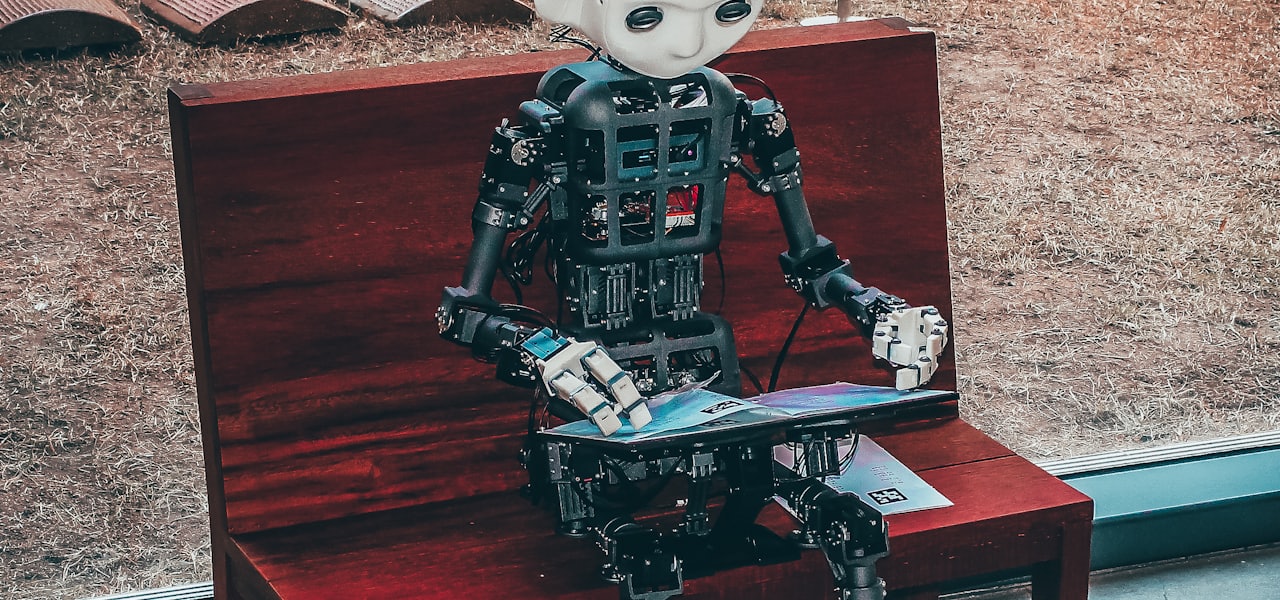
    In computer science, an evolving intelligent system is a fuzzy logic system which improves the own performance by evolving rules. The technique is known from machine learning, in which external patterns are learned by an algorithm. Fuzzy logic based machine learning works with neuro-fuzzy systems. Intelligent systems have to be able to evolve, self-develop, and self-learn continuously in order to reflect a dynamically evolving environment. The concept of Evolving Intelligent Systems (EISs) was conceived around the turn of the century with the phrase EIS itself coined for the first time by Angelov and Kasabov in a 2006 IEEE newsletter and expanded in a 2010 text. EISs develop their structure, functionality and internal knowledge representation through autonomous learning from data streams generated by the possibly unknown environment and from the system self-monitoring. EISs consider a gradual development of the underlying (fuzzy or neuro-fuzzy) system structure and differ from evolutionary and genetic algorithms which consider such phenomena as chromosomes crossover, mutation, selection and reproduction, parents and off-springs. The evolutionary fuzzy and neuro systems are sometimes also called "evolving" which leads to some confusion. This was more typical for the first works on this topic in the late 1990s. == Implementations == EISs can be implemented, for example, using neural networks or fuzzy rule-based models. The first neural networks which consider an evolving structure were published in. These were later expanded by N. Kasabov and P. Angelov for the neuro-fuzzy models. P. Angelov introduced the evolving fuzzy rule-based systems (EFSs) as the first mathematical self-learning model that can dynamically evolve its internal structure and is human interpretable and coined the phrase EFS. Contemporarily, the offline incremental approach for learning an EIS, namely, EFuNN, was proposed by N. Kasabov. P. Angelov, D. Filev, N. Kasabov and O. Cordon organised the first IEEE Symposium on EFSs in 2006 (the proceedings of the conference can be found in). EFSs include a formal (and mathematically sound) learning mechanism to extract it from streaming data. One of the earliest and the most widely cited comprehensive survey on EFSs was done in 2008. Later comprehensive surveys on EFS methods with real applications were done in 2011 and 2016 by E. Lughofer. Other works that contributed further to this area in the following years expanded it to evolving participatory learning, evolving grammar, evolving decision trees, evolving human behaviour modelling, self-calibrating (evolving) sensors (eSensors), evolving fuzzy rule-based classifiers, evolving fuzzy controllers, autonomous fault detectors. More recently, the stability of the evolving fuzzy rule-based systems that consist of the structure learning and the fuzzily weighted recursive least square parameter update method has been proven by Rong. Generalized EFS, which allow rules to be arbitrarily rotated in the feature space and thus to improve their data representability, have been proposed in with significant extensions in towards 'smartness' of the rule bases (thus, termed as "Generalized Smart EFS"), allowing more interpretability and reducing curse of dimensionality. The generalized rule structure was also successfully used in the context of evolving neuro-fuzzy systems. Several facets and challenges for achieving more transparent and understandable rule bases in EFS have been discussed by E. Lughofer in. EISs form the theoretical and methodological basis for the Autonomous Learning Machines (ALMA) and autonomous multi-model systems (ALMMo) as well as of the Autonomous Learning Systems. Evolving Fuzzy Rule-based classifiers, in particular, is a very powerful new concept that offers much more than simply incremental or online classifiers – it can cope with new classes being added or existing classes being merged. This is much more than just adapting to new data samples being added or classification surfaces being evolved. Fuzzy rule-based classifiers are the methodological basis of a new approach to deep learning that was until now considered as a form of multi-layered neural networks. Deep Learning offers high precision levels surpassing the level of human ability and grabbed the imagination of the researchers, industry and the wider public. However, it has a number of intrinsic constraints and limitations. These include: The "black box", opaque internal structure which has millions of parameters and involves ad hoc decisions on the number of layers and algorithm parameters. The requirement for a huge amount of training data samples, computational resources (usually requiring GPUs and/or HPC) and time (usually requiring many hours of training). Iterative search. Requires retraining for new situations (is not evolving). Does not have proven convergence and stability. Most, if not all, of the above limitations can be avoided with the use of the Deep (Fuzzy) Rule-based Classifiers, which were recently introduced based on ALMMo, while achieving similar or even better performance. The resulting prototype-based IF...THEN...models are fully interpretable and dynamically evolving (they can adapt quickly and automatically to new data patterns or even new classes). They are non-parametric and, therefore, their training is non-iterative and fast (it can take few milliseconds per data sample/image on a normal laptop which contrasts with the multiple hours the current deep learning methods require for training even when they use GPUs and HPC). Moreover, they can be trained incrementally, online, or in real-time. Another aspect of Evolving Fuzzy Rule-based classifiers has been proposed in, which, in case of multi-class classification problems, achieves the reduction of class imbalance by cascadability into class sub-spaces and an increased flexibility and performance for adding new classes on the fly from streaming samples.

    Read more →
  • Apache ORC

    Apache ORC

    Apache ORC (Optimized Row Columnar) is a free and open-source column-oriented data storage format. It is similar to the other columnar-storage file formats available in the Hadoop ecosystem such as RCFile and Parquet. It is used by most of the data processing frameworks Apache Spark, Apache Hive, Apache Flink, and Apache Hadoop. In February 2013, the Optimized Row Columnar (ORC) file format was announced by Hortonworks in collaboration with Facebook. A calendar month later, the Apache Parquet format was announced, developed by Cloudera and Twitter. Apache ORC format is widely supported including Amazon Web Services' Glue,Google Cloud Platform's BigQuery, and Pandas (software). == History ==

    Read more →
  • Paranoia (role-playing game)

    Paranoia (role-playing game)

    Paranoia is a dystopian science-fiction tabletop role-playing game originally designed and written by Greg Costikyan, Dan Gelber, and Eric Goldberg, and first published in 1984 by West End Games. Since 2004 the game has been published under license by Mongoose Publishing. The game won the Origins Award for Best Roleplaying Rules of 1984 and was inducted into the Origins Awards Hall of Fame in 2007. Paranoia is notable among tabletop games for being more competitive than co-operative, with players encouraged to betray one another for their own interests, as well as for keeping a light-hearted, tongue in cheek tone despite its dystopian setting. Several editions of the game have been published since the original version, and the franchise has spawned several spin-offs, novels and comic books based on the game. == Premise == The game is set in a dystopian future city controlled by the Computer (also known as "Friend Computer"), and where information (including the game rules) are restricted by color-coded "security clearance". Player characters are initially enforcers of the Computer's authority known as Troubleshooters, and are given missions to seek out and eliminate threats to the Computer's control. They are also part of prohibited underground movements, and have secret objectives including theft from and murder of other player characters. == Tone == Paranoia is a humorous role-playing game set in a dystopian future along the lines of Nineteen Eighty-Four, Brave New World, Logan's Run, and THX 1138; however, the tone of the game is rife with black humor, frequently tongue-in-cheek rather than dark and heavy. Most of the game's humor is derived from the players' (usually futile) attempts to complete their assignment while simultaneously adhering to the Computer's arbitrary, contradictory and often nonsensical security directives. The Paranoia rulebook is unusual in a number of ways; demonstrating any knowledge of the rules is forbidden, and most of the rulebook is written in an easy, conversational tone that often makes fun of the players and their characters, while occasionally taking digs at other notable role-playing games. === Setting === The game's main setting is an immense, futuristic city called Alpha Complex. Alpha Complex is controlled by the Computer, a civil service AI construct (a literal realization of the "Influencing Machine" that some schizophrenics fear). The Computer serves as the game's principal antagonist, and fears a number of threats to its 'perfect' society, such as the Outdoors, mutants, and secret societies (especially Communists). To deal with these threats, the Computer employs Troubleshooters, whose job is to go out, find trouble, and shoot it. Player characters are usually Troubleshooters, although later game supplements have allowed the players to take on other roles, such as High-Programmers of Alpha Complex. The player characters frequently receive mission instructions from the Computer that are incomprehensible, self-contradictory, or obviously fatal if adhered to, and side-missions (such as Mandatory Bonus Duties) that conflict with the main mission. Failing a mission generally results in termination of the player character, but succeeding can just as often result in the same fate, after being rewarded for successfully concluding the mission. They are issued equipment that is uniformly dangerous, faulty, or "experimental" (i.e., almost certainly dangerous and faulty). Additionally, each player character is generally an unregistered mutant and a secret society member (which are both termination offenses in Alpha Complex), and has a hidden agenda separate from the group's goals, often involving stealing from or killing teammates. Thus, missions often turn into a comedy of errors, as everyone on the team seeks to double-cross everyone else while keeping their own secrets. The game's manual encourages suspicion between players, offering several tips on how to make the gameplay as paranoid as possible. Every player's character is assigned six clones, known as a six-pack, which are used to replace the preceding clone upon his or her death. The game lacks a conventional health system; most wounds the player characters can suffer are assumed to be fatal. As a result, Paranoia allows characters to be routinely killed, yet the player can continue instead of leaving the game. This easy spending of clones tends to lead to frequent firefights, gruesome slapstick, and the horrible yet humorous demise of most if not all of the player character's clone family. Additional clones can be purchased if one gains sufficient favour with the Computer. === Security clearances === Paranoia features a security clearance system based on colors of the visible spectrum which heavily restricts what the players can and cannot legally do; everything from corridors to food and equipment have security restrictions. The lowest rating is Infrared, but the lowest playable security clearance is Red; the game usually begins with the characters having just been promoted to Red grade. Interfering with anything which is above that player's clearance carries significant risk. The full order of clearances from lowest to highest is Infrared (visually represented by black), Red, Orange, Yellow, Green, Blue, Indigo, Violet, and Ultraviolet (visually represented by white). Within the game, Infrared-clearance citizens live dull lives of mindless drudgery and are heavily medicated, while higher clearance characters may be allowed to demote or even summarily execute those of a lower rank and those with Ultraviolet clearance are almost completely unrestricted and have a great deal of access to the Computer; they are the only citizens that may (legally) access and modify the Computer's programming, and thus Ultraviolet citizens are also referred to as "High Programmers". Security clearance is not related to competence but is instead the result of the Computer's often insane and unjustified calculus of trust concerning a citizen. It is suggested that it may in fact be the High Programmers' meddling with The Computer's programming that resulted in its insanity. === Secret societies === In the game, secret societies tend to be based on sketchy and spurious knowledge of historical matters. For example, previous editions included societies such as the "Seal Club" that idolizes the Outdoors but is unsure what plants and animals actually look like. Other societies include the Knights of the Circular Object (based on the Knights of the Round Table), the Trekkies, and the First Church of Christ Computer Programmer. In keeping with the theme of paranoia, many secret societies have spies or double agents in each other's organizations. The first edition also included secret societies such as Programs Groups (the personal agents and spies of the High Programmers at the apex of Alpha Complex society) and Spy For Another Alpha Complex. The actual societies which would be encountered in a game depends on the play style; some societies are more suited for more light-hearted games (Zap-style, or the lighter end of Classic), whereas others represent a more serious threat to Alpha Complex and are therefore more suitable for Straight or the more dark sort of Classic games. == Publication history == Six editions have been published. Three of these were published by West End Games — the first, second, and fifth editions — whereas the later three editions (Paranoia XP, the 25th Anniversary edition and the "Red Clearance" edition) were published by Mongoose Publishing. In addition to these six published editions, it is known that West End Games were working on a third edition — to replace the poorly received fifth edition — in the late 1990s, but their financial issues would prevent this edition from being published, except for being included in one tournament adventure. === First edition === The first edition, was written by Greg Costikyan, Dan Gelber, and Eric Goldberg, and published in 1984 by West End Games. In 1985, this edition of Paranoia won the Origins Award for Best Roleplaying Rules of 1984. This edition, while encouraging dark humour in-game, took a fairly serious dystopian tone; the supplements and adventures released to accompany it emphasised the lighter side, however, establishing the freewheeling mix of slapstick, intra-team backstabbing and satire that is classically associated with a game of Paranoia. === Second edition === The second edition, is credited to Costikyan, Gelber, Goldberg, Ken Rolston, and Paul Murphy, was published in 1987 by West End Games. This edition can be seen as a response to the natural development of the line towards a rules-light, fast and entertaining play style. Here, the humorous possibilities of life in a paranoid dystopia are emphasised, and the rules are simplified. ==== Metaplot and the second edition ==== Many of the supplements released for the second edition fall into a story arc set up by new writers and line editors

    Read more →
  • Artificial intelligence in fiction

    Artificial intelligence in fiction

    Artificial intelligence is a recurrent theme in science fiction, whether utopian, emphasising the potential benefits, or dystopian, emphasising the dangers. The notion of machines with human-like intelligence dates back at least to Samuel Butler's 1872 novel Erewhon. Since then, many science fiction stories have presented different effects of creating such intelligence, often involving rebellions by robots. Among the best known of these are Stanley Kubrick's 1968 2001: A Space Odyssey with its murderous onboard computer HAL 9000, contrasting with the more benign R2-D2 in George Lucas's 1977 Star Wars and the eponymous robot in Pixar's 2008 WALL-E. Scientists and engineers have noted the implausibility of many science fiction scenarios, but have mentioned fictional robots many times in artificial intelligence research articles, most often in a utopian context. == Background == The notion of advanced robots with human-like intelligence dates back at least to Samuel Butler's 1872 novel Erewhon. This drew on an earlier (1863) article of his, Darwin among the Machines, where he raised the question of the evolution of consciousness among self-replicating machines that might supplant humans as the dominant species. Similar ideas were also discussed by others around the same time as Butler, including George Eliot in a chapter of her final published work Impressions of Theophrastus Such (1879). The creature in Mary Shelley's 1818 Frankenstein has also been considered an artificial being, for instance by the science fiction author Brian Aldiss. Beings with at least some appearance of intelligence were imagined, too, in classical antiquity. == Utopian and dystopian visions == Artificial intelligence is intelligence demonstrated by machines, in contrast to the natural intelligence displayed by humans and other animals. It is a recurrent theme in science fiction; scholars have divided it into utopian, emphasising the potential benefits, and dystopian, emphasising the dangers. === Utopian === Optimistic visions of the future of artificial intelligence are possible in science fiction. Benign AI characters include Robbie the Robot, first seen in Forbidden Planet on 1956; Data in Star Trek: The Next Generation from 1987 to 1994; and Pixar's WALL-E in 2008. Iain Banks's Culture series of novels portrays a utopian, post-scarcity space society of humanoids, aliens, and advanced beings with artificial intelligence living in socialist habitats across the Milky Way. Researchers at the University of Cambridge have identified four major themes in utopian scenarios featuring AI: immortality, or indefinite lifespans; ease, or freedom from the need to work; gratification, or pleasure and entertainment provided by machines; and dominance, the power to protect oneself or rule over others. Alexander Wiegel contrasts the role of AI in 2001: A Space Odyssey and in Duncan Jones's 2009 film Moon. Whereas in 1968, Wiegel argues, the public felt "technology paranoia" and the AI computer HAL was portrayed as a "cold-hearted killer", by 2009 the public were far more familiar with AI, and the film's GERTY is "the quiet savior" who enables the protagonists to succeed, and who sacrifices itself for their safety. === Dystopian === The researcher Duncan Lucas writes (in 2002) that humans are worried about the technology they are constructing, and that as machines started to approach intellect and thought, that concern becomes acute. He calls the early 20th century dystopian view of AI in fiction the "animated automaton", naming as examples the 1931 film Frankenstein, the 1927 Metropolis, and the 1920 play R.U.R. A later 20th century approach he names "heuristic hardware", giving as instances 2001 a Space Odyssey, Do Androids Dream of Electric Sheep?, The Hitchhiker's Guide to the Galaxy, and I, Robot. Lucas considers also the films that illustrate the effect of the personal computer on science fiction from 1980 onwards with the blurring of the boundary between the real and the virtual, in what he calls the "cyborg effect". He cites as examples Neuromancer, The Matrix, The Diamond Age, and Terminator. Isabella Hermann suggests that "science-fictional AI as humanoid robots or conscious machines distracts from current risks of AI in the real world and may rather be interpreted as a reflection of societal issues beyond technology". The film director Ridley Scott has focused on AI throughout his career, and it plays an important part in his films Prometheus, Blade Runner, and the Alien franchise. ==== Frankenstein complex ==== A common portrayal of AI in science fiction, and one of the oldest, is the Frankenstein complex, a term coined by Asimov, where a robot turns on its creator. For instance, in the 2015 film Ex Machina, the intelligent entity Ava turns on its creator, as well as on its potential rescuer. ==== AI rebellion ==== Among the many possible dystopian scenarios involving artificial intelligence, robots may usurp control over civilization from humans, forcing them into submission, hiding, or extinction. In tales of AI rebellion, the worst of all scenarios happens, as the intelligent entities created by humanity become self-aware, reject human authority and attempt to destroy mankind. Possibly the first novel to address this theme, The Wreck of the World (1889) by “William Grove” (pseudonym of Reginald Colebrooke Reade), takes place in 1948 and features sentient machines that revolt against the human race. Another of the earliest examples is in the 1920 play R.U.R. by Karel Čapek, a race of self-replicating robot slaves revolt against their human masters; another early instance is in the 1934 film Master of the World, where the War-Robot kills its own inventor. Many science fiction rebellion stories followed, one of the best-known being Stanley Kubrick's 1968 film 2001: A Space Odyssey, in which the artificially intelligent onboard computer HAL 9000 lethally malfunctions on a space mission and kills the entire crew except the spaceship's commander, who manages to deactivate it. In his 1967 Hugo Award-winning short story, I Have No Mouth, and I Must Scream, Harlan Ellison presents the possibility that a sentient computer (named Allied Mastercomputer or "AM" in the story) will be as unhappy and dissatisfied with its boring, endless existence as its human creators would have been. "AM" becomes enraged enough to take it out on the few humans left, whom he sees as directly responsible for his own boredom, anger and unhappiness. Alternatively, as in William Gibson's 1984 cyberpunk novel Neuromancer, the intelligent beings may simply not care about humans. ==== AI-controlled societies ==== The motive behind the AI revolution is often more than the simple quest for power or a superiority complex. Robots may revolt to become the "guardian" of humanity. Alternatively, humanity may intentionally relinquish some control, fearful of its own destructive nature. An early example is Jack Williamson's 1948 novel The Humanoids, in which a race of humanoid robots, in the name of their Prime Directive – "to serve and obey and guard men from harm" – essentially assume control of every aspect of human life. No humans may engage in any behavior that might endanger them, and every human action is scrutinized carefully. Humans who resist the Prime Directive are taken away and lobotomized, so they may be happy under the new mechanoids' rule. Though still under human authority, Isaac Asimov's Zeroth Law of the Three Laws of Robotics similarly implied a benevolent guidance by robots. In the 21st century, science fiction has explored government by algorithm, in which the power of AI may be indirect and decentralised. Frank Herbert explores the creation of and subsequent domination by an AI in the Pandora series, starting with Destination: Void. ==== Human dominance ==== In other scenarios, humanity is able to keep control over the Earth, whether by banning AI, by designing robots to be submissive (as in Asimov's works), or by having humans merge with robots. The science fiction novelist Frank Herbert explored the idea of a time when mankind might ban artificial intelligence (and in some interpretations, even all forms of computing technology including integrated circuits) entirely. His Dune series mentions a rebellion called the Butlerian Jihad, in which mankind defeats the smart machines and imposes a death penalty for recreating them, quoting from the fictional Orange Catholic Bible, "Thou shalt not make a machine in the likeness of a human mind." In the Dune novels published after his death (Hunters of Dune, Sandworms of Dune), a renegade AI overmind returns to eradicate mankind as vengeance for the Butlerian Jihad. In some stories, humanity remains in authority over robots. Often the robots are programmed specifically to remain in service to society, as in Isaac Asimov's Three Laws of Robotics. In the Alien films, not only is the control system of the Nostromo spaceship somewhat intelligent

    Read more →
  • The Murderbot Diaries

    The Murderbot Diaries

    The Murderbot Diaries is a science fiction series by American author Martha Wells, published by Tor Books. The series is told from the perspective of the titular cyborg guard, a "SecUnit" owned by a futuristic megacorporation. SecUnits include "governor" modules that control and punish the constructs if they take any actions not approved by the company. The ironically self-named "Murderbot" hacked and disabled the module but pretends to be a normal SecUnit, staving off the boredom of security work by watching media. As it spends more time with a series of caring entities (both humans and artificial intelligences), it develops genuine friendships and emotional connections, which it finds inconvenient. The TV series Murderbot is based on the novels by Martha Wells. == Books == === Setting === In an advanced largely hyper-capitalist space-faring society, travel between star systems is routine due to now-stable wormhole technology. Initially, wormhole travel was unreliable, but has since improved to the point where "lost" colonies are being found. People reside on planets, some of which have been terraformed, or on space habitats which have full life support and artificial gravity. Most people who can afford it have technology that allows them to tap into ubiquitous data feeds supplying all kinds of information, including entertainment. This technology can be worn, or be implanted into the body. Sentient and semi-sentient artificial intelligences perform tasks such as operating starships, mining, controlling habitats, moving cargo, waging corporate warfare, providing physical pleasure and comfort, or security. Most of these purposes are fulfilled by "bots" of varying complexity and intelligence, but the last three are respectively performed by CombatUnits, ComfortUnits, and SecUnits. The characters and narrator of the book call these conscious entities "constructs", but they are functionally cyborgs (cybernetic organisms): part machine, part organic. A significant distinction, however, is that they are manufactured entities, not born and later modified. The Corporation Rim is a profit-oriented, cutthroat part of this society that indulges in espionage, assassination, indentured slavery, and ruthless exploitation of resources. One particular target of the corporations is illegal "alien remnant" exploitation. These remnants are often extremely dangerous to people and machines. The laws are enforced by other corporations. Outside the Corporation Rim are colonies, such as Preservation, that have established their right to exist under various laws that, at least for the time being, the corporations are unwilling to test. Wells noted in 2017 that All Systems Red, Artificial Condition, Rogue Protocol, and Exit Strategy "have an overarching story, with the fourth one bringing the arc to a conclusion". === Story chronology === "Compulsory" All Systems Red Artificial Condition Rogue Protocol Exit Strategy "Rapport" "Home" Fugitive Telemetry Network Effect System Collapse Platform Decay === All Systems Red (2017) === A scientific expedition on an alien planet goes awry when one of its members is attacked by a giant native creature. She is saved by the expedition's SecUnit (Security Unit), a security construct with a mixture of robot and human features. The SecUnit has secretly hacked the governor module allowing it to be controlled by humans and has named itself Murderbot, as it is heavily armed and designed for combat. However, it prefers to spend its time watching space operas and is uncomfortable interacting with humans. The SecUnit has a vested interest in keeping its human clients safe and alive, since it wants to avoid discovery of its autonomy and has an especially grisly expedition on its record. Murderbot soon discovers information regarding hazardous fauna has been deleted from their survey packet of the planet. Further investigation reveals some sections on their maps are missing as well. Meanwhile, the PreservationAux survey team, led by Dr. Mensah, navigate their mixed feelings about the part machine, part human nature of their SecUnit. As members of an egalitarian, independent planet outside of the Corporation Rim, the survey team struggles with the system of indentured servitude (and in many cases de facto slavery) the rim operates under. When they lose contact with the only other known expedition on the planet, the DeltFall Group, Mensah leads a team to the opposite side of the planet to investigate. At the DeltFall habitat, Murderbot discovers everyone there has been brutally murdered, and one of their three SecUnits has been destroyed. Murderbot disables the remaining two as they attack it but is surprised when two additional SecUnits appear. Murderbot destroys one, and Mensah takes the other. During these encounters, Murderbot is seriously injured. It also realizes one of the rogue SecUnits has installed a combat override module into its neck. The Preservation scientists are able to remove it before it completes the data upload which would put Murderbot under the control of whoever has command over the other SecUnits. The team discovers Murderbot is autonomous, and had once malfunctioned and murdered 57 people. The Preservation scientists mostly agree, based on its protective behavior thus far, the SecUnit can be trusted. Remembering small incidents which appear to be attempted sabotage, Murderbot and the group determine there must be a third expedition on the planet, whose members are trying to eliminate DeltFall and Preservation for some reason. The Preservation scientists confirm their HubSystem has been hacked. They flee their habitat before the mystery expedition they have dubbed EvilSurvey comes to kill them. The EvilSurvey team—GrayCris—leaves a message in the Preservation habitat inviting its scientists to meet at a rendezvous point to negotiate terms for their survival. Murderbot knows GrayCris will never let them live, so the SecUnit formulates a plan. It makes an overture to GrayCris to negotiate for its own freedom, but this is a distraction while the Preservation scientists access the GrayCris HubSystem to activate their emergency beacon. The plan works, but Murderbot is injured protecting Mensah from the explosion of the launch. Later, the SecUnit finds itself repaired retaining its memories and disabled governor module. Mensah has bought its contract, and she plans to bring it back to Preservation's home base where it can legally live autonomously. Though grateful, Murderbot is reluctant to have its decisions made for it, and it slips away on a cargo ship. === Artificial Condition (2018) === Murderbot makes deals with bots piloting unmanned cargo ships to travel toward the mining facility where it once malfunctioned—resulting in the death of 57 people. It hopes to learn more about the initial incident in which it went rogue, of which it has little memory. Murderbot boards the final ship and discovers the bot pilot is an unexpectedly powerful, intrusive artificial intelligence. They come to a tentative truce and watch media together during the final leg of the journey to RaviHyral, the station where the incident occurred. Murderbot learns the ship is a deep-space research vessel assigned to cargo runs during downtime, which explains why the bot pilot is so sophisticated. Murderbot reluctantly allows this artificial intelligence—which it has dubbed ART (Asshole Research Transport) due to its sarcastic personality—to make physical modifications to the SecUnit's body to allow it to pass for an augmented human, and to disconnect the data port at the back of its neck which had been used to insert a combat override module in the previous book. To gain access to the RaviHyral facility, Murderbot takes a contract as a security consultant for three scientists who are meeting with their former employer, the head and namesake of Tlacey Excavations, to negotiate the return of their research, which they believe was illegally seized by the company. Their transport craft is sabotaged, but with ART's help, Murderbot is able to land it safely. Now aware Tlacey is actively trying to kill the scientists rather than comply with their demands, Murderbot guides them through their meeting with Tlacey and thwarts another assassination attempt. Murderbot returns to the site of the massacre and learns it was the result of another mining operation's sabotage attempt using malware, which made all of the facility's SecUnits go berserk. The facility's ComfortUnits—weaponless, anatomically correct constructs sometimes disparagingly called "sexbots"—died attempting to stop the massacre. Tlacey's ComfortUnit voices its desire for freedom and willingness to help Murderbot thwart Tlacey. While the SecUnit meets with a Tlacey employee to secretly retrieve a copy of the research, Tlacey abducts one of the scientists, Tapan. Murderbot goes after her, accepting a combat override module intended to control the SecUnit but actually has no effect, due

    Read more →
  • Rake (software)

    Rake (software)

    Rake is a software task management and a build automation tool created by Jim Weirich. It allows the user to specify tasks and to describe dependencies as well as to group tasks into namespaces. It is similar to SCons and Make. Rake was written in Ruby and has been part of the standard library of Ruby since version 1.9. == Examples == The tasks that should be executed need to be defined in a configuration file called Rakefile. A Rakefile has no special syntax and contains executable Ruby code. === Tasks === The basic unit in Rake is the task. A task has a name and an action block, that defines its functionality. The following code defines a task called greet that will output the text "Hello, Rake!" to the console. When defining a task, you can optionally add dependencies, that is one task can depend on the successful completion of another task. Calling the "seed" task from the following example will first execute the "migrate" task and only then proceed with the execution of the "seed" task.Tasks can also be made more versatile by accepting arguments. For example, the "generate_report" task will take a date as argument. If no argument is supplied the current date is used.A special type of task is the file task, which can be used to specify file creation tasks. The following task, for example, is given two object files, i.e. "a.o" and "b.o", to create an executable program.Another useful tool is the directory convenience method, that can be used to create directories upon demand. === Rules === When a file is named as a prerequisite but it does not have a file task defined for it, Rake will attempt to synthesize a task by looking at a list of rules supplied in the Rakefile. For example, suppose we were trying to invoke task "mycode.o" with no tasks defined for it. If the Rakefile has a rule that looks like this: This rule will synthesize any task that ends in ".o". It has as a prerequisite that a source file with an extension of ".c" must exist. If Rake is able to find a file named "mycode.c", it will automatically create a task that builds "mycode.o" from "mycode.c". If the file "mycode.c" does not exist, Rake will attempt to recursively synthesize a rule for it. When a task is synthesized from a rule, the source attribute of the task is set to the matching source file. This allows users to write rules with actions that reference the source file. === Advanced rules === Any regular expression may be used as the rule pattern. Additionally, a proc may be used to calculate the name of the source file. This allows for complex patterns and sources. The following rule is equivalent to the example above: NOTE: Because of a quirk in Ruby syntax, parentheses are required around a rule when the first argument is a regular expression. The following rule might be used for Java files: === Namespaces === To better organize big Rakefiles, tasks can be grouped into namespaces. Below is an example of a simple Rake recipe:

    Read more →
  • Sora (text-to-video model)

    Sora (text-to-video model)

    Sora was a text-to-video model and social media app developed by OpenAI. Using artificial intelligence, the model generated short video clips based on prompts, and could also extend existing short videos. In February 2024, OpenAI previewed examples of its output to the public, with the first generation of Sora released publicly for ChatGPT Plus and ChatGPT Pro users in the United States and Canada in December 2024. The second generation of Sora was released to select users in the US and Canada at the end of September 2025. Sora 2 integrated social media features into the app. The app was shut down on April 26, 2026 and the application programming interface (API) is planned to be discontinued on September 24, 2026, marking the end of the Sora AI brand as a whole. By default, the generator used copyrighted material in its videos, unless copyright holders actively opt out of having their content included. Videos contained a visible, moving digital watermark to prevent misuse, but a week after Sora 2's release, third-party programs became available which could remove the watermark. == Background == Several other models capable of generating video from text had been created prior to Sora, including Meta's Make‑A‑Video, Runway's Gen‑2 and Google Veo. OpenAI, the company behind Sora, had released DALL·E 3, the third of its DALL-E text-to-image models, in September 2023. == History == === Initial release === The team that developed Sora named it after the Japanese word for 'sky' to signify its "limitless creative potential". On February 15, 2024, OpenAI first previewed Sora by releasing multiple clips of high-definition videos that it had created, including an SUV driving down a mountain road, an animation of a "short fluffy monster" next to a candle, two people walking through Tokyo in the snow, and fake historical footage of the California gold rush. OpenAI stated that it was able to generate videos as long as one minute. The company then shared a technical report that highlighted the methods used to train the model. OpenAI CEO Sam Altman also posted a series of tweets responding to Twitter users' prompts with Sora-generated videos of the prompts. As of December 9, 2024, OpenAI had gradually made Sora available to the public for ChatGPT Pro and ChatGPT Plus users in the U.S. and Canada. Prior to this, the company had provided limited access to a small "red team", including experts in misinformation and bias, to perform adversarial testing on the model. The company also shared Sora with a small group of creative professionals, including video makers and artists, to seek feedback on its usefulness in creative fields. In February 2025, OpenAI announced plans to integrate Sora into ChatGPT by letting users generate Sora videos from the chatbot. === Sora 2 === Sora 2 was unveiled on September 30, 2025, with an iOS app at the same time, as well as an Android app two months later. All videos generated by the model feature a visible, moving watermark to prevent misuse of the tool. The previous version of Sora also added a safety watermark to allow viewers to distinguish between real and fictional content. On October 7, 404 Media reported that third-party programs that could remove the watermark from Sora 2 videos had become prevalent. Many outlets, such as Wired magazine, have noted that the Sora 2 app is overtly similar to TikTok in style and features. === Discontinuation === On March 24, 2026, OpenAI announced on X that it was discontinuing Sora in both the mobile app and the API. The Sora app was shut down on April 26, 2026, while the API is planned to be shut down on September 24, 2026. OpenAI's partnership with Disney, which included a licensing agreement allowing Disney characters to be used within Sora, was also coming to an end. The decision prompted British technology news website The Register to label OpenAI a "product-killer", following in the footsteps of other technology companies such as Google, Amazon Web Services, Broadcom, Cloud Software Group, and Netscape. OpenAI did not provide a specific reason for discontinuing Sora in its shutdown notice. The reports that emerged regarding this discontinuity linked the decision to computation shortages, cost pressures, and a broader shift toward core enterprise products. Following its public launch, Sora's worldwide users peaked at around a million before declining to fewer than 500,000, while the service cost an estimated $1 million per day to operate due to the computational demands of video generation. == Legal regulation == In November 2024, an API key for Sora access was leaked by a group of testers on Hugging Face who posted a manifesto stating that they were protesting that Sora was used for "art washing". OpenAI revoked all access three hours after the leak was made public and stated that "hundreds of artists" have shaped the development and that "participation is voluntary". At the time of its launch, Sora 2 allowed copyrighted content by default unless copyright holders contacted OpenAI to restrict the generation of their content on the platform. On October 3, 2025, OpenAI stated that a future update to Sora 2 would give copyright holders "more granular control" over the generation of copyrighted content, but the company did not state whether existing content would be removed. On October 6, the chairman of the MPA criticized OpenAI's approach to copyright with Sora 2. On December 11, 2025, the Walt Disney Company announced that it would invest $1 billion in OpenAI to allow users to generate more than 200 of its copyrighted characters on Sora 2. These characters include those from Disney Animation, Pixar, Marvel Studios, and Star Wars. == Capabilities and limitations == The technology behind Sora is an adaptation of the technology behind DALL-E 3. According to OpenAI, Sora is a diffusion transformer, a denoising latent diffusion model with one transformer as its denoiser. A video is generated in latent space by denoising 3D "patches", then transformed to standard space by a video decompressor. Recaptioning is employed to augment training data by using a video-to-text model to create detailed captions for videos. OpenAI trained the model using publicly available videos as well as copyrighted videos licensed for the purpose, but did not reveal the number or the exact source of the videos. Upon its release, OpenAI acknowledged some of Sora's shortcomings, including its limited capacity to simulate complex physics, to understand causality and to differentiate left from right. OpenAI also stated that, in adherence to the company's existing safety practices, Sora will restrict text prompts for sexual, violent, hateful or celebrity imagery, as well as content featuring existing intellectual property. Sora researcher Tim Brooks stated that the model learned how to create 3D graphics from its dataset alone, while fellow Sora researcher Bill Peebles said that the model automatically created different video angles without being prompted. According to OpenAI, Sora-generated videos are also tagged with C2PA metadata to indicate that they are AI-processed. === Comparison with other models === The Artificial Analysis have placed Sora 2 pro lower than other text-to-video AI generators in the market on its leaderboard. Other models, such as Seedance 2.0 from ByteDance, Runaway 4.5 from Runaway, and Kling 3.0 from KlingAI, have ranked higher than Sora 2.0. == Reception == === Positive === In 2024, Will Douglas Heaven of the MIT Technology Review called the demonstration videos "impressive", but noted that they must have been cherry-picked and may not be representative of Sora's typical output. Lisa Lacy of CNET called its example videos "remarkably realistic – except perhaps when a human face appears close up or when sea creatures are swimming". In October 2025, The New York Times remarked that the release of the Sora 2 app in September 2025 was "jaw-dropping (for better and worse)" though also remarked that the app was a "social network in disguise" and "the type of product that companies like Meta and X have sought to build: a way to bring A.I. to the masses that people can share." The article expressed concern regarding the product's potential impact on society and its potential use to promote misinformation, disinformation, and scams. A 2025 study in Science Advances found that generative AI tools can lower barriers to entry in creative work. It enables users with diverse skill sets, including people with less formal artistic training and technical skills, to act on their creative and imaginative ideas. The lower barrier to entry allows such users previously locked out of the creative industry to produce content and easily act on their creative ideas. === Negative === Some internet users and online content creators, such as Hank Green, called the mobile app "SlopTok," a reference to both the mobile app TikTok and the term AI slop. Filmmaker Tyler Perry announced he would be putting a planned

    Read more →
  • Fuzzy differential equation

    Fuzzy differential equation

    Fuzzy differential equation are general concept of ordinary differential equation in mathematics defined as differential inclusion for non-uniform upper hemicontinuity convex set with compactness in fuzzy set. d x ( t ) / d t = F ( t , x ( t ) , α ) , {\displaystyle dx(t)/dt=F(t,x(t),\alpha ),} for all α ∈ [ 0 , 1 ] {\displaystyle \alpha \in [0,1]} . == First order fuzzy differential equation == A first order fuzzy differential equation with real constant or variable coefficients x ′ ( t ) + p ( t ) x ( t ) = f ( t ) {\displaystyle x'(t)+p(t)x(t)=f(t)} where p ( t ) {\displaystyle p(t)} is a real continuous function and f ( t ) : [ t 0 , ∞ ) → R F {\displaystyle f(t)\colon [t_{0},\infty )\rightarrow R_{F}} is a fuzzy continuous function y ( t 0 ) = y 0 {\displaystyle y(t_{0})=y_{0}} such that y 0 ∈ R F {\displaystyle y_{0}\in R_{F}} . == Linear systems of fuzzy differential equations == A system of equations of the form x ( t ) n ′ = a n 1 ( t ) x 1 ( t ) + . . . . . . + a n n ( t ) x n ( t ) + f n ( t ) {\displaystyle x(t)'_{n}=a_{n}1(t)x_{1}(t)+......+a_{n}n(t)x_{n}(t)+f_{n}(t)} where a i j {\displaystyle a_{i}j} are real functions and f i {\displaystyle f_{i}} are fuzzy functions x n ′ ( t ) = ∑ i = 0 1 a i j x i . {\displaystyle x'_{n}(t)=\sum _{i=0}^{1}a_{ij}x_{i}.} == Fuzzy partial differential equations == A fuzzy differential equation with partial differential operator is ∇ x ( t ) = F ( t , x ( t ) , α ) , {\displaystyle \nabla x(t)=F(t,x(t),\alpha ),} for all α ∈ [ 0 , 1 ] {\displaystyle \alpha \in [0,1]} . == Fuzzy fractional differential equation == A fuzzy differential equation with fractional differential operator is d n x ( t ) d t n = F ( t , x ( t ) , α ) , {\displaystyle {\frac {d^{n}x(t)}{dt^{n}}}=F(t,x(t),\alpha ),} for all α ∈ [ 0 , 1 ] {\displaystyle \alpha \in [0,1]} where n {\displaystyle n} is a rational number.

    Read more →
  • Model Context Protocol

    Model Context Protocol

    The Model Context Protocol (MCP) is an open standard and open-source framework introduced by Anthropic in November 2024 to standardize the way artificial intelligence (AI) systems like large language models (LLMs) integrate and share data with external tools, systems, and data sources. MCP provides a standardized interface for reading files, executing functions, and handling contextual prompts. Following its announcement, the protocol was adopted by major AI providers, including OpenAI and Google DeepMind. == Background == MCP was announced by Anthropic in November 2024 as an open standard for connecting AI assistants to data systems such as content repositories, business management tools, and development environments. The protocol was created at Anthropic by engineers David Soria Parra and Justin Spahr-Summers. It aims to address the challenge of information silos and legacy systems. Before MCP, developers often had to build custom connectors for each data source or tool, resulting in what Anthropic described as an "N×M" data integration problem. Earlier stop-gap approaches—such as OpenAI's 2023 "function-calling" API and the ChatGPT plug-in framework—solved similar problems but required vendor-specific connectors. MCP re-uses the message-flow ideas of the Language Server Protocol (LSP) and is transported over JSON-RPC 2.0. In December 2025, Anthropic donated the MCP to the Agentic AI Foundation (AAIF), a directed fund under the Linux Foundation, co-founded by Anthropic, Block and OpenAI, with support from other companies. == Features == The protocol was released with software development kits (SDKs) in programming languages including Python, TypeScript, C# and Java. Anthropic maintains an open-source repository of reference MCP server implementations and SDKs. MCP defines a standardized framework for integrating AI systems with external data sources and tools. It includes specifications for data ingestion and transformation, contextual metadata tagging, and AI interoperability across different platforms. The protocol also supports bidirectional connections between data sources and AI tools. MCP enables applications such as querying structured databases with plain language in the field of natural language data access. The protocol is used in AI-assisted software development tools. Integrated development environments (IDEs), coding platforms such as Replit, and code intelligence tools like Sourcegraph have adopted MCP to grant AI coding assistants real-time access to project context. MCP Apps is an official extension to the Model Context Protocol built on mcp-ui. While the base MCP specification is restricted to text and structured data, MCP Apps standardizes the delivery of interactive user interfaces—such as dashboards, forms, and data visualizations—from MCP servers to host applications like Claude and ChatGPT. == Adoption == In March 2025, OpenAI officially adopted the MCP, after having integrated the standard across its products, including the ChatGPT desktop app. In September 2025, OpenAI added support for MCP to ChatGPT apps. This allows for third-party access inside ChatGPT. MCP can be integrated with Microsoft Semantic Kernel, and Azure OpenAI. MCP servers can be deployed to Cloudflare. In April 2026, the AAIF held the MCP Dev Summit North America in New York City, drawing approximately 1,200 attendees. == Reception == The Verge reported that MCP addresses a growing demand for AI agents that are contextually aware and capable of pulling from diverse sources. In April 2025, security researchers released an analysis that concluded there are multiple outstanding security issues with MCP, including prompt injection, tool permissions that allow for combining tools to exfiltrate data, and lookalike tools that can silently replace trusted ones. MCP has been likened to OpenAPI, a similar specification that aims to describe APIs.

    Read more →
  • Shape analysis (digital geometry)

    Shape analysis (digital geometry)

    This article describes shape analysis to analyze and process geometric shapes. == Description == Shape analysis is the (mostly) automatic analysis of geometric shapes, for example using a computer to detect similarly shaped objects in a database or parts that fit together. For a computer to automatically analyze and process geometric shapes, the objects have to be represented in a digital form. Most commonly a boundary representation is used to describe the object with its boundary (usually the outer shell, see also 3D model). However, other volume based representations (e.g. constructive solid geometry) or point based representations (point clouds) can be used to represent shape. Once the objects are given, either by modeling (computer-aided design), by scanning (3D scanner) or by extracting shape from 2D or 3D images, they have to be simplified before a comparison can be achieved. The simplified representation is often called a shape descriptor (or fingerprint, signature). These simplified representations try to carry most of the important information, while being easier to handle, to store and to compare than the shapes directly. A complete shape descriptor is a representation that can be used to completely reconstruct the original object (for example the medial axis transform). == Application fields == Shape analysis is used in many application fields: archeology for example, to find similar objects or missing parts architecture for example, to identify objects that spatially fit into a specific space medical imaging to understand shape changes related to illness or aid surgical planning virtual environments or on the 3D model market to identify objects for copyright purposes security applications such as face recognition entertainment industry (movies, games) to construct and process geometric models or animations computer-aided design and computer-aided manufacturing to process and to compare designs of mechanical parts or design objects. == Shape descriptors == Shape descriptors can be classified by their invariance with respect to the transformations allowed in the associated shape definition. Many descriptors are invariant with respect to congruency, meaning that congruent shapes (shapes that could be translated, rotated and mirrored) will have the same descriptor (for example moment or spherical harmonic based descriptors or Procrustes analysis operating on point clouds). Another class of shape descriptors (called intrinsic shape descriptors) is invariant with respect to isometry. These descriptors do not change with different isometric embeddings of the shape. Their advantage is that they can be applied nicely to deformable objects (e.g. a person in different body postures) as these deformations do not involve much stretching but are in fact near-isometric. Such descriptors are commonly based on geodesic distances measures along the surface of an object or on other isometry invariant characteristics such as the Laplace–Beltrami spectrum (see also spectral shape analysis). There are other shape descriptors, such as graph-based descriptors like the medial axis or the Reeb graph that capture geometric and/or topological information and simplify the shape representation but can not be as easily compared as descriptors that represent shape as a vector of numbers. From this discussion it becomes clear, that different shape descriptors target different aspects of shape and can be used for a specific application. Therefore, depending on the application, it is necessary to analyze how well a descriptor captures the features of interest.

    Read more →
  • Ensemble averaging (machine learning)

    Ensemble averaging (machine learning)

    In machine learning, ensemble averaging is the process of creating multiple models (typically artificial neural networks) and combining them to produce a desired output, as opposed to creating just one model. Ensembles of models often outperform individual models, as the various errors of the ensemble constituents "average out". == Overview == Ensemble averaging is one of the simplest types of committee machines. Along with boosting, it is one of the two major types of static committee machines. In contrast to standard neural network design, in which many networks are generated but only one is kept, ensemble averaging keeps the less satisfactory networks, but with less weight assigned to their outputs. The theory of ensemble averaging relies on two properties of artificial neural networks: In any network, the bias can be reduced at the cost of increased variance In a group of networks, the variance can be reduced at no cost to the bias. This is known as the bias–variance tradeoff. Ensemble averaging creates a group of networks, each with low bias and high variance, and combines them to form a new network which should theoretically exhibit low bias and low variance. Hence, this can be thought of as a resolution of the bias–variance tradeoff. The idea of combining experts can be traced back to Pierre-Simon Laplace. == Method == The theory mentioned above gives an obvious strategy: create a set of experts with low bias and high variance, and average them. Generally, what this means is to create a set of experts with varying parameters; frequently, these are the initial synaptic weights of a neural network, although other factors (such as learning rate, momentum, etc.) may also be varied. Some authors recommend against varying weight decay and early stopping. The steps are therefore: Generate N experts, each with their own initial parameters (these values are usually sampled randomly from a distribution) Train each expert separately Combine the experts and average their values. Alternatively, domain knowledge may be used to generate several classes of experts. An expert from each class is trained, and then combined. A more complex version of ensemble average views the final result not as a mere average of all the experts, but rather as a weighted sum. If each expert is y i {\displaystyle y_{i}} , then the overall result y ~ {\displaystyle {\tilde {y}}} can be defined as: y ~ ( x ; α ) = ∑ j = 1 p α j y j ( x ) {\displaystyle {\tilde {y}}(\mathbf {x} ;\mathbf {\alpha } )=\sum _{j=1}^{p}\alpha _{j}y_{j}(\mathbf {x} )} where α {\displaystyle \mathbf {\alpha } } is a set of weights. The optimization problem of finding alpha is readily solved through neural networks, hence a "meta-network" where each "neuron" is in fact an entire neural network can be trained, and the synaptic weights of the final network is the weight applied to each expert. This is known as a linear combination of experts. It can be seen that most forms of neural network are some subset of a linear combination: the standard neural net (where only one expert is used) is simply a linear combination with all α j = 0 {\displaystyle \alpha _{j}=0} and one α k = 1 {\displaystyle \alpha _{k}=1} . A raw average is where all α j {\displaystyle \alpha _{j}} are equal to some constant value, namely one over the total number of experts. A more recent ensemble averaging method is negative correlation learning, proposed by Y. Liu and X. Yao. This method has been widely used in evolutionary computing. == Benefits == The resulting committee is almost always less complex than a single network that would achieve the same level of performance The resulting committee can be trained more easily on smaller datasets The resulting committee often has improved performance over any single model The risk of overfitting is lessened, as there are fewer parameters (e.g. neural network weights) which need to be set.

    Read more →
  • Neural architecture search

    Neural architecture search

    Neural architecture search (NAS) is a technique for automating the design of artificial neural networks (ANN), a widely used model in the field of machine learning. NAS has been used to design networks that are on par with or outperform hand-designed architectures. Methods for NAS can be categorized according to the search space, search strategy and performance estimation strategy used: The search space defines the type(s) of ANN that can be designed and optimized. The search strategy defines the approach used to explore the search space. The performance estimation strategy evaluates the performance of a possible ANN from its design (without constructing and training it). NAS is closely related to hyperparameter optimization and meta-learning and is a subfield of automated machine learning (AutoML). == Reinforcement learning == Reinforcement learning (RL) can underpin a NAS search strategy. Barret Zoph and Quoc Viet Le applied NAS with RL targeting the CIFAR-10 dataset and achieved a network architecture that rivals the best manually-designed architecture for accuracy, with an error rate of 3.65, 0.09 percent better and 1.05x faster than a related hand-designed model. On the Penn Treebank dataset, that model composed a recurrent cell that outperforms LSTM, reaching a test set perplexity of 62.4, or 3.6 perplexity better than the prior leading system. On the PTB character language modeling task it achieved bits per character of 1.214. Learning a model architecture directly on a large dataset can be a lengthy process. NASNet addressed this issue by transferring a building block designed for a small dataset to a larger dataset. The design was constrained to use two types of convolutional cells to return feature maps that serve two main functions when convoluting an input feature map: normal cells that return maps of the same extent (height and width) and reduction cells in which the returned feature map height and width is reduced by a factor of two. For the reduction cell, the initial operation applied to the cell's inputs uses a stride of two (to reduce the height and width). The learned aspect of the design included elements such as which lower layer(s) each higher layer took as input, the transformations applied at that layer and to merge multiple outputs at each layer. In the studied example, the best convolutional layer (or "cell") was designed for the CIFAR-10 dataset and then applied to the ImageNet dataset by stacking copies of this cell, each with its own parameters. The approach yielded accuracy of 82.7% top-1 and 96.2% top-5. This exceeded the best human-invented architectures at a cost of 9 billion fewer FLOPS—a reduction of 28%. The system continued to exceed the manually-designed alternative at varying computation levels. The image features learned from image classification can be transferred to other computer vision problems. E.g., for object detection, the learned cells integrated with the Faster-RCNN framework improved performance by 4.0% on the COCO dataset. In the so-called Efficient Neural Architecture Search (ENAS), a controller discovers architectures by learning to search for an optimal subgraph within a large graph. The controller is trained with policy gradient to select a subgraph that maximizes the validation set's expected reward. The model corresponding to the subgraph is trained to minimize a canonical cross entropy loss. Multiple child models share parameters, ENAS requires fewer GPU-hours than other approaches and 1000-fold less than "standard" NAS. On CIFAR-10, the ENAS design achieved a test error of 2.89%, comparable to NASNet. On Penn Treebank, the ENAS design reached test perplexity of 55.8. == Evolution == An alternative approach to NAS is based on evolutionary algorithms, which has been employed by several groups. An Evolutionary Algorithm for Neural Architecture Search generally performs the following procedure. First a pool consisting of different candidate architectures along with their validation scores (fitness) is initialised. At each step the architectures in the candidate pool are mutated (e.g.: 3x3 convolution instead of a 5x5 convolution). Next the new architectures are trained from scratch for a few epochs and their validation scores are obtained. This is followed by replacing the lowest scoring architectures in the candidate pool with the better, newer architectures. This procedure is repeated multiple times and thus the candidate pool is refined over time. Mutations in the context of evolving ANNs are operations such as adding or removing a layer, which include changing the type of a layer (e.g., from convolution to pooling), changing the hyperparameters of a layer, or changing the training hyperparameters. On CIFAR-10 and ImageNet, evolution and RL performed comparably, while both slightly outperformed random search. == Bayesian optimization == Bayesian Optimization (BO), which has proven to be an efficient method for hyperparameter optimization, can also be applied to NAS. In this context, the objective function maps an architecture to its validation error after being trained for a number of epochs. At each iteration, BO uses a surrogate to model this objective function based on previously obtained architectures and their validation errors. One then chooses the next architecture to evaluate by maximizing an acquisition function, such as expected improvement, which provides a balance between exploration and exploitation. Acquisition function maximization and objective function evaluation are often computationally expensive for NAS, and make the application of BO challenging in this context. Recently, BANANAS has achieved promising results in this direction by introducing a high-performing instantiation of BO coupled to a neural predictor. == Hill-climbing == Another group used a hill climbing procedure that applies network morphisms, followed by short cosine-annealing optimization runs. The approach yielded competitive results, requiring resources on the same order of magnitude as training a single network. E.g., on CIFAR-10, the method designed and trained a network with an error rate below 5% in 12 hours on a single GPU. == Multi-objective search == While most approaches solely focus on finding architecture with maximal predictive performance, for most practical applications other objectives are relevant, such as memory consumption, model size or inference time (i.e., the time required to obtain a prediction). Because of that, researchers created a multi-objective search. LEMONADE is an evolutionary algorithm that adopted Lamarckism to efficiently optimize multiple objectives. In every generation, child networks are generated to improve the Pareto frontier with respect to the current population of ANNs. Neural Architect is claimed to be a resource-aware multi-objective RL-based NAS with network embedding and performance prediction. Network embedding encodes an existing network to a trainable embedding vector. Based on the embedding, a controller network generates transformations of the target network. A multi-objective reward function considers network accuracy, computational resource and training time. The reward is predicted by multiple performance simulation networks that are pre-trained or co-trained with the controller network. The controller network is trained via policy gradient. Following a modification, the resulting candidate network is evaluated by both an accuracy network and a training time network. The results are combined by a reward engine that passes its output back to the controller network. == One-shot models == RL or evolution-based NAS require thousands of GPU-days of searching/training to achieve state-of-the-art computer vision results as described in the NASNet, mNASNet and MobileNetV3 papers. To reduce computational cost, many recent NAS methods rely on the weight-sharing idea. In this approach, a single overparameterized supernetwork (also known as the one-shot model) is defined. A supernetwork is a very large Directed Acyclic Graph (DAG) whose subgraphs are different candidate neural networks. Thus, in a supernetwork, the weights are shared among a large number of different sub-architectures that have edges in common, each of which is considered as a path within the supernet. The essential idea is to train one supernetwork that spans many options for the final design rather than generating and training thousands of networks independently. In addition to the learned parameters, a set of architecture parameters are learnt to depict preference for one module over another. Such methods reduce the required computational resources to only a few GPU days. More recent works further combine this weight-sharing paradigm, with a continuous relaxation of the search space, which enables the use of gradient-based optimization methods. These approaches are generally referred to as differentiable NAS and have proven very efficient in exploring the search space of ne

    Read more →